
Los Angeles pedestrian and bicycle attorney
When a car hits someone walking or riding, the injuries are rarely minor, and the insurer’s first move is almost always to say it was your fault for being there.
Three things most people don’t know
- Being partly at fault doesn’t end your claim
- California is a pure comparative fault state. If you crossed outside a crosswalk, rode without lights or wore dark clothes at night, your share comes off what you recover. It doesn’t wipe it out. At 10% at fault, you still recover 90%.
- A crosswalk doesn’t have to be painted
- At most intersections there’s a legal crosswalk whether or not it’s painted. Most drivers don’t know that.
- Drivers have to give you three feet
- California’s Three Feet for Safety Act sets the minimum distance for passing a cyclist. A driver who sideswipes you or runs you off the road broke it, and that helps prove fault.
Pedestrian cases
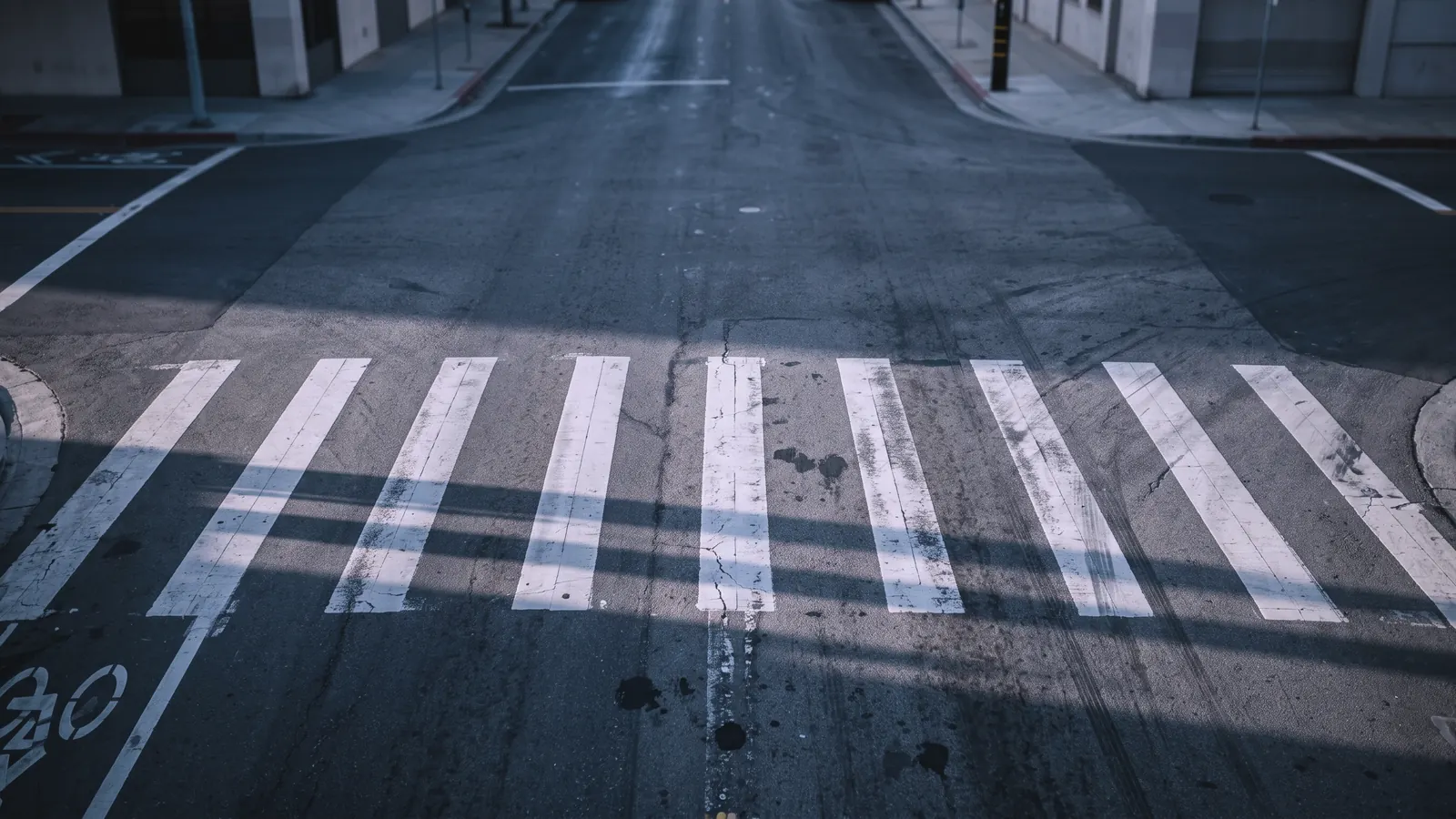
Crosswalks
A driver fails to yield to somebody with the right of way, usually while turning, usually distracted.
Failure to yield
Turning, pulling out of a driveway or merging into someone crossing legally.
Parking lots and garages
Backing out, driving too fast, or not watching for people between parked cars.
Sidewalks and curbs
A car jumps the curb and hits someone who wasn’t even in the road.
School zones
Kids and pedestrians where drivers are legally required to slow down and take extra care.
Hit and run
The driver leaves. Usually an uninsured motorist claim on your own policy while the police look for them.
Night and low visibility
The question becomes whether the driver was going too fast for what they could see. That argument cuts both ways, and it’s often winnable.
Bicycle cases
Dooring
A parked car’s door opens right into your path. Common wherever street parking sits next to a bike lane.
Right hooks and left crosses
A driver turns right across you, or left into you. Almost always because they didn’t see you or misjudged your speed.
Bike lane encroachment
A car drifts into, merges into or parks in the bike lane and forces you into traffic.
Rear-end collisions
A driver doesn’t see you, or passes badly. Serious injuries even at moderate speed, because nothing protects you.
Road hazards and bad infrastructure
Potholes, a badly maintained lane, debris or bad road design. If a public agency is responsible for the road, the claim may be against them.
Passing too close
A driver doesn’t give you the legally required distance.
What we do on these cases
Get the traffic and business camera footage before it’s erased, which at a busy intersection can happen within days.
Prove right of way with the traffic laws and the evidence.
Take apart the “it was your fault” argument with evidence. That’s where most of the money in these cases is won or lost.
Find everyone responsible, including an employer if the driver was working, and a public agency if the road was the problem.