
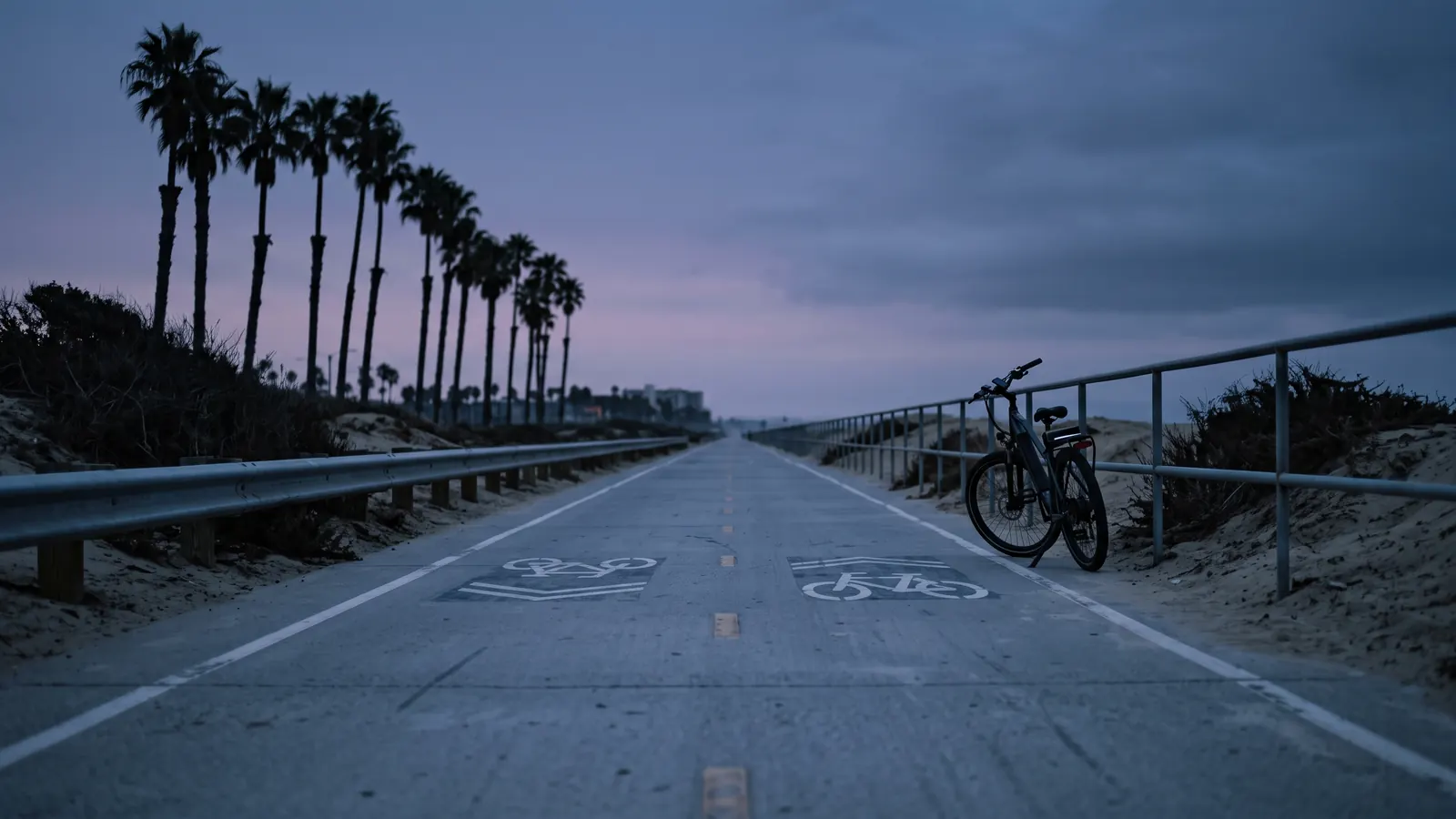
Los Angeles e-bike accident attorney
An e-bike moves at motorcycle speeds and protects you like a bicycle. That’s why the injuries are worse than people expect, and why the insurer always makes the same argument: you shouldn’t have been there, going that fast.
The three classes
- Class 1
- Pedal assist only. The motor helps while you pedal and stops helping at 20 mph.
- Class 2
- Has a throttle, so the motor can move the bike without pedaling. It stops helping at 20 mph.
- Class 3
- Pedal assist up to 28 mph, with a speedometer. Riders must be at least 16, and everyone on it needs a helmet.
Why these cases keep growing
A UC San Diego study of California Highway Patrol crash data counted 1,506 e-bike collisions in 2024, up from 2 in 2018. E-bike riders were more likely than other cyclists to be badly hurt.
Anyone under 18 needs a helmet on any e-bike. And a bike modified to go faster than 20 mph on the motor alone, or to run a motor over 750 watts, isn’t an e-bike under California law anymore. Insurers check for both, and so do we.
What to know before they make that argument
- An e-bike is a bicycle under California law
- No license, registration or insurance required. You did nothing wrong by riding one, but there’s also no policy of your own behind you, like there would be on a motorcycle. The other driver’s coverage, and possibly your own uninsured motorist coverage, matter more.
- They’ll ask what class your bike is
- The class decides the age and helmet rules, and local rules on where you can ride. The other side will look for a violation, because it’s the cheapest way to shift fault onto you.
- Breaking one of those rules doesn’t end your claim
- California is a pure comparative fault state. If some of the fault lands on you, it reduces what you recover. It doesn’t wipe it out.
The cases we take
Hit by a car
The most common. Drivers judge an e-bike’s speed like a pedal bike’s, then pull out or turn in front of you.
Dooring
A parked car’s door opens into your path. At e-bike speed there’s even less time to react.
Bike lane conflicts
A car drifts into, parks in or turns across the bike lane. Fault turns on the lane markings and the right of way.
Road hazards
Potholes, ridges, debris, bad pavement. Narrow tires go down on things a car never notices. If a public agency maintains the road, the claim may be against them.
Defective batteries and fires
Lithium battery failures and charging fires. That’s a product claim against the manufacturer, importer or seller.
Mechanical failure
Brakes, forks, motors or controllers that failed. A defect claim against the manufacturer can run alongside a claim against a driver.
Rental and shared bikes
Docked or dockless rental bikes. Someone was responsible for maintaining that bike, whatever the rental agreement says.
What we do on an e-bike case
Prove what the bike actually was, so the class question is settled by evidence.
Get the footage early. These crashes happen at intersections and outside businesses, where video is erased fast.
Find every policy, including your own uninsured motorist coverage. Depending on the policy, it can cover you on a bike, and most riders don’t know it.
Keep the bike if a defect is possible. Once it’s thrown away, the product claim goes with it.